


Cartier Baignoire – WJBA0043
Baignoire de Cartier – Small Model
Jewelry meets time in radiant gold
This refined small model features a 750/1000 yellow gold case, fully set with 227 brilliant-cut diamonds (2.25 carats), and is powered by a quartz movement.
Its mother-of-pearl dial is framed under sapphire crystal, with gladius-shaped hands finished in yellow gold. The pearly crown is adorned with an additional diamond (0.08 carats), adding a final touch of sparkle.
The watch is paired with a black alligator leather strap featuring a painted lacquer effect and a 750/1000 yellow gold ardillon buckle.
Case dimensions: 31.4 × 23.1 mm
Thickness: 6.9 mm
Water resistance: Up to 30 meters


Cartier Baignoire Small ,Yellow Gold ,Quartz – WGBA0024
Cartier Baignoire Small
A timepiece like jewelry
The iconic Baignoire de Cartier, now in a Small version (31.4 × 23.1 mm), entirely crafted in 750/1000 yellow gold.
Its oval case houses a quartz movement, with a silver dial, blued gladius-shaped hands, and sapphire crystal. The crown is adorned with a sapphire cabochon, and the rigid bracelet is also made of 750/1000 yellow gold.
Thickness: 6.9 mm. Water-resistant up to 30 meters.


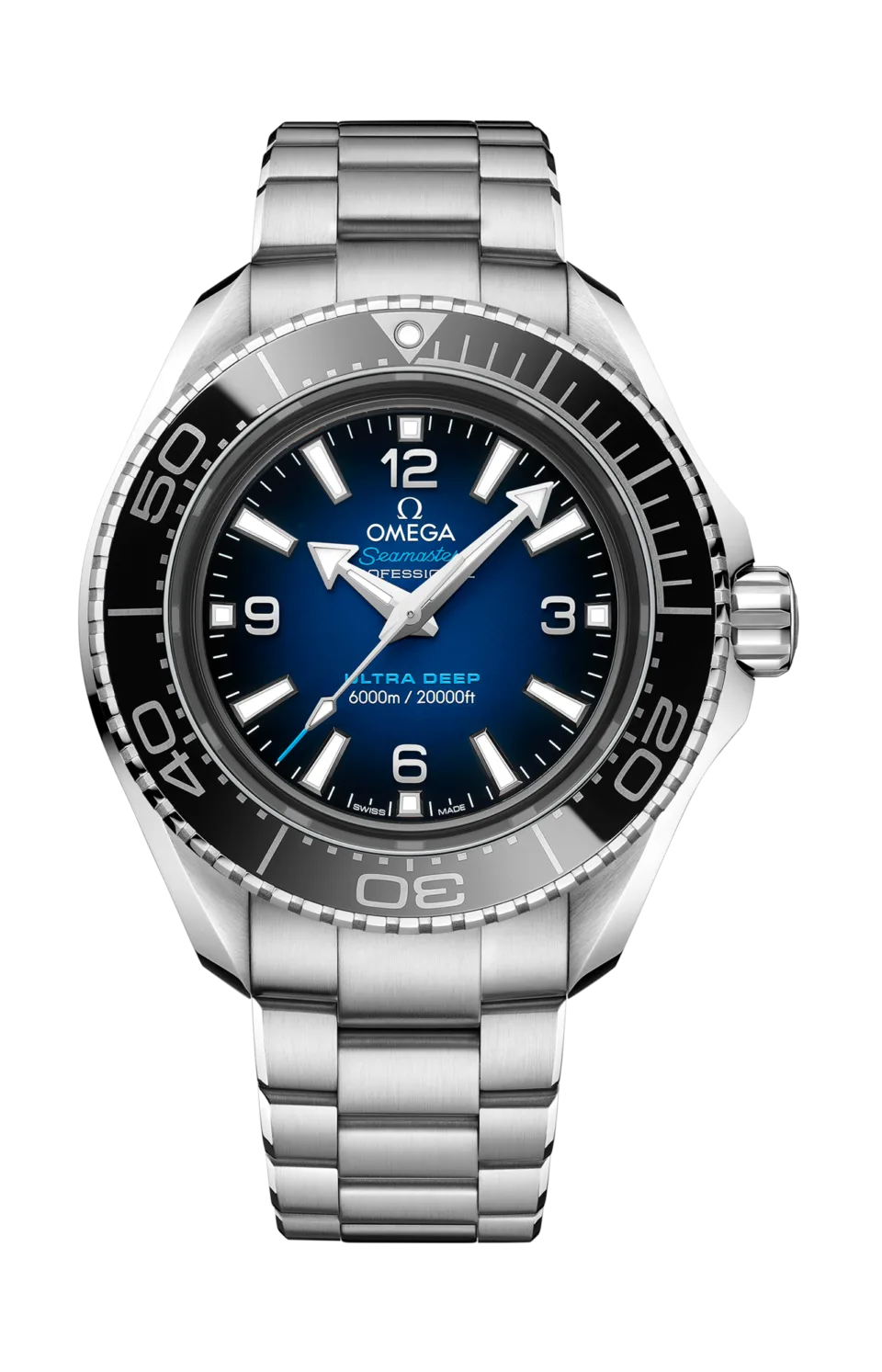


Tissot PRX Powermatic 80 40 mm T137.907.97.201.00
The new Tissot PRX Powermatic 80, in a 40 mm size, features a unique forged carbon fiber case. This innovative material makes each watch one of a kind, while also offering lightweight durability. Designed for optimal performance in challenging conditions, it’s perfect for individuals looking to push their limits. The model blends functionality with style, making it an excellent choice for those who value both.
The watch combines elegant design with high-quality craftsmanship. The dial is protected by scratch-resistant sapphire crystal, ensuring clarity and durability. Powered by an automatic movement visible through the transparent case back, it boasts an impressive 80-hour power reserve.
Key Features
Collection: T-Classic
Weight: 75 g
Water Resistance: Up to 10 bar (100 m)
Warranty: 2 years


Audemars Piguet Royal Oak Selfwindig Flying Tourbillon 26735SG.OO.1320SG.01
Audemars Piguet Royal Oak Selfwinding Flying Tourbillon Openworked 41 mm – Sand Gold Edition
Overview
The Audemars Piguet Royal Oak Selfwinding Flying Tourbillon Openworked is a luxurious timepiece that epitomizes the pinnacle of horological craftsmanship. This 41 mm watch is a groundbreaking creation, introducing sand gold, a new 18-carat gold alloy that shifts between white and pink gold, offering an ever-changing aesthetic that plays with light and perspective. This unique alloy enhances the watch’s visual appeal, making it a masterpiece of both technical innovation and design.
Case
- Material: 18-carat sand gold
- Crystal: Glareproofed sapphire crystal
- Caseback: Glareproofed sapphire
- Size: 41 mm in diameter
- Thickness: 10.6 mm
- Water Resistance: 50 meters (5 ATM)
The case of the Royal Oak Selfwinding Flying Tourbillon Openworked is crafted from the newly developed 18-carat sand gold, which subtly shifts in tone depending on the light and angle. The sapphire crystal and caseback are glareproofed, ensuring a clear view of both the dial and the intricate movement within.
Dial
- Inner Bezel: Sand gold-toned
- Hour Markers: White gold, applied
- Hands: Royal Oak hands in white gold with luminescent coating
The dial of the watch is a showcase of sophistication, featuring a sand gold-toned inner bezel that complements the white gold hour markers and hands. The luminescent coating on the hands ensures readability in low light, while the openworked design offers a captivating view of the complex movement.
Bracelet
- Material: 18-carat sand gold
- Clasp: AP folding clasp
The bracelet is made from the same 18-carat sand gold as the case, creating a seamless and luxurious continuity in design. It is secured with an AP folding clasp, offering both elegance and security.
Movement
- Calibre: 2972
- Type: Selfwinding mechanical
- Functions: Hours, minutes, and flying tourbillon
- Power Reserve: 65 hours
- Frequency: 3 Hz (21,600 vph)
- Number of Jewels: 27
- Total Diameter: 31.5 mm
- Thickness: 6.2 mm
- Number of Parts: 271
The Royal Oak Selfwinding Flying Tourbillon Openworked is powered by the Calibre 2972, a selfwinding movement that is a marvel of modern horology. The movement is composed of 271 individual parts and includes a flying tourbillon, a feature that eliminates the need for an upper bridge, allowing for an unobstructed view of the tourbillon as it spins. The movement’s meticulous craftsmanship is evident in its sand gold-toned and rhodium-toned hues, which are visible through the openworked design. With a power reserve of 65 hours, this watch is as reliable as it is beautiful.
The Audemars Piguet Royal Oak Selfwinding Flying Tourbillon Openworked 41 mm in sand gold is a remarkable timepiece that combines avant-garde materials with traditional Swiss watchmaking excellence. Its unique sand gold alloy, openworked movement, and flying tourbillon make it a standout piece in any collection, offering a perfect blend of innovation, craftsmanship, and timeless style.

Cartier Santos De Cartier Skeleton Watch WHSA0019
This unique watch model owes its name to the aviation pioneer Alberto Santos Dumont. It first appeared in 1904 and, as legend has it, it was created by Cartier on Santos’ order to help the Brazilian pilot keep time correctly.
The watch remained a legend and after over a hundred years, the Santos model received another incarnation. This time it is a skeleton masterpiece made of gold and steel, with a transparent case made of sapphire glass. The watch mechanism inside is unique, with elements also made of yellow gold. At first, the untrained eye will see mainly gears and intersecting strips of precious metal. Only a careful look will reveal the Roman numerals – III, VI, IX, XII located around the square center of the watch mechanism.
This unique men’s timepiece is made, along with the bracelet with gold and steel.


Cartier Santos Skeleton WHSA0016
This unique watch model owes its name to the aviation pioneer Alberto Santos Dumont. It first appeared in 1904 and, as legend has it, it was created by Cartier on Santos’ order to help the Brazilian pilot keep time correctly.
The watch remained a legend and after over a hundred years, the Santos model received another incarnation. This time it is a skeleton masterpiece made of rose gold, with a transparent case made of sapphire glass. The watch mechanism inside is unique, with elements also made of rose gold. At first, the untrained eye will see mainly gears and intersecting strips of precious metal. Only a careful look will reveal the Roman numerals – III, VI, IX, XII located around the square center of the watch mechanism.
This unique men’s timepiece is made, along with the bracelet, almost entirely of rose gold.


Patek Philippe – Nautilus Self Winding 5980/60G-001
The Patek Philippe Nautilus is a sophisticated watch featuring a white gold case and an automatic flyback chronograph mechanism. Its opaline blue-gray dial is perfectly matched with two included straps: one made of denim-patterned calfskin leather, and the other of composite material with a fabric texture. The leather strap features contrasting white stitching and a white gold Nautilus fold-over clasp.
The watch case measures 40.5 mm in diameter and 12.2 mm in thickness, with water resistance up to 30 meters. It is distinguished by a refined combination of polished and satin finishes. The dial includes chronograph indications organized in a large monocounter at 6 o’clock with three concentric scales, while the central chronograph seconds hand can also function as a continuous seconds display. Additionally, there is a date window at 3 o’clock. The white gold hour markers have a white luminescent coating for visibility in the dark.
The sapphire crystal on the case back allows a look at Self-winding mechanical movement.


Patek Philippe – Nautilus – 5990/1R-001
5990/1R – NAUTILUS
SELF-WINDING
Patek Philippe presents the Nautilus Travel Time Chronograph Reference 5990/1 in a generous rose gold version contrasting with the sunburst blue dial featuring an embossed horizontal pattern and applied hour-markers. The baton-style hands are in rose gold with a luminescent coating. This new model combines three highly sought-after complications: a self-winding flyback chronograph, an easy-to-use Travel Time function (dual time-zone), and a date display, coupled with local time.


Patek Philippe – Nautilus – 5990/1A-011
5990/1A – NAUTILUS
SELF-WINDING
The Ref. 5990/1A-011 Nautilus Travel Time chronograph is one of Patek Philippe’s rare steel watches. It features a new blue dial with a ray sunburst dial and a delicate black gradation to the periphery.
The self-winding caliber CH 28-520 C FUS movement combines three convenient and user-friendly complications: a flyback chronograph, a Travel Time function (two time zones with two separate hour hands; the skeletonized hand shows home time) and an analog date at 12 o’clock which is synchronized with local time.


Patek Philippe – Nautilus – 5980/60G-001
5980/60G – NAUTILUS
SELF-WINDING
The Nautilus self-winding flyback chronograph comes in a new white gold version with an opaline blue-gray dial. This refined shade is echoed on the blue-gray denim-patterned calfskin strap with white gold Nautilus fold-over clasp. The watch is also delivered with an additional blue-gray composite material strap with fabric pattern.
The case and bezel are distinguished by contrasting polished and satin finishes.
Chronograph indications are grouped in an original and legible large 6 o’clock monocounter with three concentric scales. The central chronograph seconds hand can also be used as a running seconds display.


Patek Philippe – Nautilus – 5726/1A-014
5726/1A – NAUTILUS
SELF-WINDING
A NEW BLUE DIAL SHADING TO BLACK FOR THE STEEL VERSION
The steel Nautilus, endowed with an Annual Calendar and moon-phase display, now features a new blue dial inspired from the dial color of the original Nautilus model of 1976. Horizontal embossing and subtle grading from blue to black at the dial’s periphery create a powerful yet refined aesthetic that perfectly complements the sheen of the metal.
This elegantly sporty exterior, water-resistant to 30 m, conceals a caliber 324 S QA LU 24H/303 self-winding movement comprising 347 parts, which can be admired through a sapphire crystal case back.

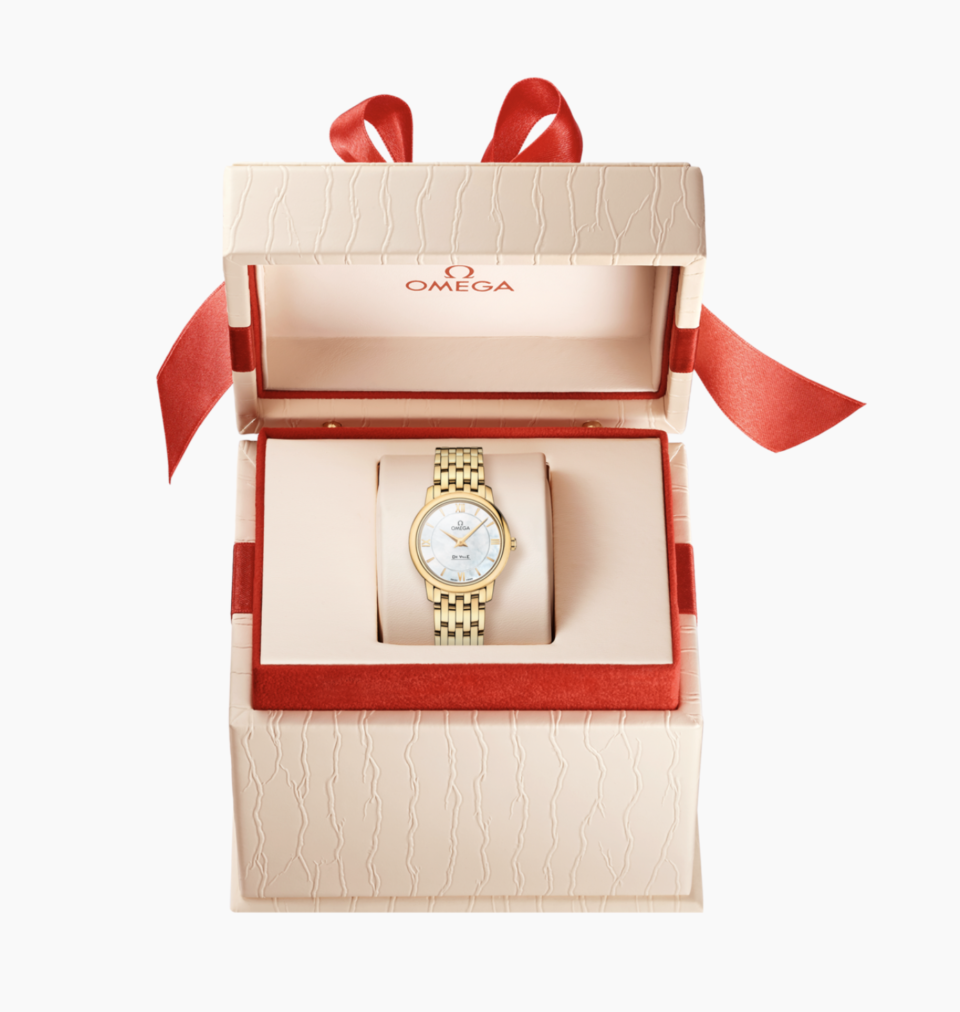
Omega De Ville Prestige 424.50.27.60.05.001
The OMEGA De Ville Prestige collection has attracted a large and loyal following with its classic, elegant design. These timepieces are characterised by pure styling with luxury finishes, and exude a timeless design.
This model features a two-zone, white mother-of-pearl dial with gold-fashioned Roman numeral hour indexes at the 3, 6, 9 and 12 o’clock positions. A scratch-resistant sapphire crystal covers this striking dial. The bezel is mounted on a 27.4 mm 18K yellow gold case and is presented on an 18K yellow gold bracelet. This wristwatch is powered by OMEGA’s calibre 1376, a precision quartz movement.

FRANCK MULLER AETERNITAS 1 8888T
The Aeternitas Mega – the most complicated wristwatch in the world – is the pinnacle of success in the art of watchmaking in terms of complexity and complications. With 36 complications and 1’483 components, the Aeternitas Mega is a wonder of micro-mechanic and watchmaking know-how. Wholly manufactured in-house, each of the 1,483 components, was designed to give the watch an elegant design in the pure traditions of the old “cadraturiers” of the Vallée de Joux. The name of the Aeternitas comes from Latin and means eternity. It is in tribute to the eternal calendar in the Aeternitas Mega that follows a 1000-year cycle renewable to infinity.


Chopard Classic 163154-1001
Legendary Swiss timepiece manufacturer Chopard began with the work of one artisan watchmaker, Louise-Ulysse Chopard. By the 19th century, the Chopard name helped build a reputation of reliability and quality for Swiss-made products. Their Happy Diamonds watch in 1976 was a revolutionary combination of precision and haute jewelry, with fanciful floating diamonds sliding and spinning freely between two sapphire crystals. Today, they continue to craft timepieces that combine meticulous, precision mechanics with the opulence of luxury jewelry.


Chopard Classic 163154-0001
Legendary Swiss timepiece manufacturer Chopard began with the work of one artisan watchmaker, Louise-Ulysse Chopard. By the 19th century, the Chopard name helped build a reputation of reliability and quality for Swiss-made products. Their Happy Diamonds watch in 1976 was a revolutionary combination of precision and haute jewelry, with fanciful floating diamonds sliding and spinning freely between two sapphire crystals. Today, they continue to craft timepieces that combine meticulous, precision mechanics with the opulence of luxury jewelry.


Omega De Ville Prestige Quartz 424.20.27.60.53.002
The OMEGA De Ville Prestige collection has attracted a large and loyal following with its classic, elegant design. This model features an impressive two-zone, sun-brushed blue dial with diamond-set indexes and Roman numerals at the 3, 6, 9 and 12 o’clock positions.
The striking dial is protected by a scratch-resistant sapphire crystal. The 18K yellow gold bezel is mounted on a 27.4 mm stainless steel case and is presented on a two-tone yellow gold-steel bracelet. This wristwatch is powered by OMEGA’s quartz calibre 1376.


Quai des Bergues Lady No.7
From the Quai des Bergues Lady collection, Czapek presents the Lady No.7 model, clad in a luxurious 1N white gold case and adorned with lustrous diamonds. The model measures a 38.5mm diameter and is topped with a curved scratch resistant sapphire crystal glass lens that protects the surface of a stunning mother of pearl dial. The captivating pearly shades of the dial are accompanied by glistening VVS diamonds located at each hour marker. The display, with white gold Fleur de Lys hands, also features a small second sub-dial at 7 o’clock and a power reserve indicator at 5 o’clock.
The Czapek Quai des Bergues Lady No.7 watch is powered by one of the brand’s proprietary movements, complete with double open ratchets, sandblasted bridges, blue screws, bevelling, and final anglage decoration that have all been made visible through a sapphire crystal glass caseback. The manual winding movement is capable of producing a 7 day power reserve that can be read from the power reserve indicator at 5 o’clock. To complete its elegant look, the white gold Quai des Bergues watch is fitted on a deep blue alligator leather strap with a white gold buckle.


Quai Des Bergues N°17 Double Soleil Deep Blue Czapek
One size never truly fits all – and with this in mind, Czapek presents its Quai des Bergues model in a new, 40.5mm case. The steel case retains all of the stylistic signatures of the Quai des Bergues case – with a slight refinement of the case-side recesses in order to incorporate the movement (Calibre SXH1) – and a subtle change to the slope of the lugs to ensure a perfect fit on the wrist.
The SXH1 caliber is a proprietary movement designed by Czapek. It is the first in a family of movements developed specifically for Czapek watches, according to the strictest rules of the watchmaking art. It was conceived in cooperation with Le Locle based company Chronode. This manually wound movement has two barrel springs, ensuring 7 days of power reserve and runs at a rate of 21,600 vibrations per hour, (3 Hertz). It features an annular balance wheel with weights for variable inertia and a Breguet terminal curve balance spring. The balance cock has been finely skeletonized and streamlined to give the whole balance greater transparency. It is finely decorated and remains aesthetically and functionally true to the 1850 original. The architecture remains symmetrical, and the sandblasted finish is a modern interpretation of the ‘satiné frost’ technique used in the 19th Century.